Cockroach Janta Party’s Uprising Against India’s Election Commission
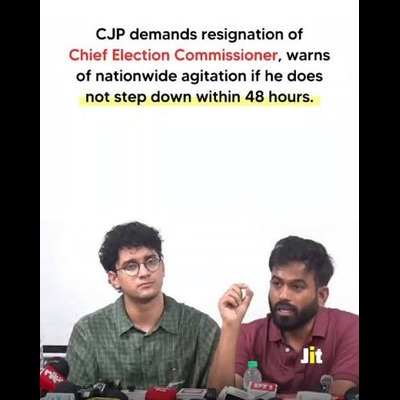
Youth-led Cockroach Janta Party (CJP), detailing its escalation from student-led educational protests to a high-stakes campaign demanding the resignation of Chief Election Commissioner Gyanesh Kumar over contested electoral roll revisions.

3 min read · India
In contemporary political resistance, few movements have captured the volatile mood of India’s youth quite like the Cockroach Janta Party (CJP).
Fresh off high-profile political victories earlier in the year that rattled New Delhi’s power structures, the youth-driven collective has turned its crosshairs toward the nation’s democratic machinery. Mobilising under a provocative banner and demanding the immediate resignation of Chief Election Commissioner (CEC) Gyanesh Kumar, the movement has transformed simmering institutional distrust into a full-scale political confrontation.
How It Started: From Exam Leaks to Electoral Integrity
To understand the rise of the CJP, one must look back at its foundational momentum. Founded by activist and political organiser Abhijeet Dipke, the group earned its unconventional moniker by embracing the metaphor of the resilient, hard-to-eradicate "cockroach" symbolising marginalised and frustrated youth pushing back against entrenched state bureaucracy.
The movement first burst into national prominence during a wave of high-impact student demonstrations that successfully forced the resignation of India's education minister over systemic exam-paper leaks. Galvanised by that success, the CJP expanded its mandate from educational reform to core institutional accountability.
The current collision course with the Election Commission of India (ECI) ignited following widespread reports, data leaks, and political allegations regarding controversial roll purges. Opposition coalitions and independent election watchdogs raised alarms over the Special Intensive Revision (SIR) process of electoral rolls, accusing the commission of irregularly deleting millions of voters without warning while adding unverified entries.
When internal reports surfaced suggesting that senior election commissioners were sidelined during sweeping voter roll adjustments, the CJP seized the moment, issuing an aggressive 48-hour ultimatum demanding CEC Gyanesh Kumar step down.
Core Student and Youth Demands
Refusing to treat the controversy as a standard partisan squabble, the CJP backed by various civil society voices and student factions—has laid out a rigid, non-negotiable set of demands:
- The Resignation of the CEC: Immediate resignation of Chief Election Commissioner Gyanesh Kumar, alongside calls for formal criminal investigations into alleged procedural manipulation of the electoral machinery.
- Halting the SIR Process: An immediate freeze on the ongoing Special Intensive Revision of electoral rolls, which critics argue threatens mass disenfranchisement.
- Reversion to Baseline Rolls: A strict mandate that any upcoming elections must rely safely and transparently on the stable 2025 electoral rolls.
- Independent Oversight: The restructuring of how election commissioners are selected, demanding an independent body rather than executive appointment to guarantee institutional neutrality.
Current Situation and Ongoing Escalation
The friction point reached a critical velocity as the CJP announced a wave of coordinated demonstrations.
- The State Pushback: Anticipating widespread civil disruption, law enforcement agencies including police authorities in major urban centres like Mumbai have moved to deny formal permits for planned mobilisation events, citing public safety and security concerns.
- The Nationwide Mobilisation: Despite official pushback and denials of assembly permissions, CJP leadership has pressed forward with mobilisation strategies, drawing solidarity from prominent civic figures and regional opposition groups (including INDIA bloc factions).
- The Political Fallout: The Election Commission has formally rejected accusations of bias or intentional disenfranchisement. However, the defense has done little to quell the political storm. With opposition parties closing ranks and youth groups threatening persistent street agitation, the crisis has evolved into one of the most severe public challenges to India's independent election administration in decades.
As demonstrations unfold across key regional hubs, the "cockroach" movement has made its message clear: the integrity of India's democracy is non-negotiable, and the digital-era youth are willing to swarm the streets to protect it.
An independent journalist specialising in India's local politics, tech, health environmental issues.
Comments (0)
Comments are turned off for this story.