Inside Donald Trump’s Unflinching Return to the UN General Assembly
Donald Trump's return to the UN General Assembly bypasses decades of multilateral consensus, leveraging raw, transactional rhetoric to challenge traditional diplomatic norms.

2 min read · Sydney, Australia
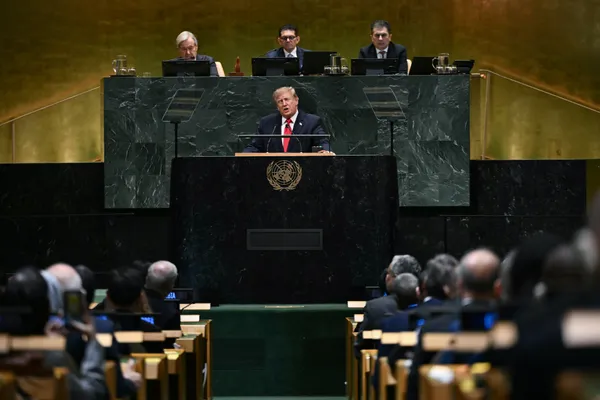
NEW YORK — If you’ve spent enough decades watching diplomats shuffle through the muted-blue corridors of the United Nations, you develop an ear for the rhythm of the place. It’s an ecosystem built on circumspection—a language of velvet-wrapped threats, coded communiqués, and the kind of high-gloss diplomatic boilerplate that has kept translators nodding in their booths since the Eisenhower administration.
Then Donald Trump steps up to the green marble podium.
Listening to Trump address the UN General Assembly isn’t like listening to a traditional head of state. It’s closer to watching someone roll a hand grenade into a parlor room, then pull up a chair to watch the smoke clear. For roughly thirty-five minutes, the 81st session of the UNGA got a heavy dose of the familiar rally-circuit cadence dropped straight into the heart of Turtle Bay.
The contrast was jarring, even by modern standards. Sat in the grand assembly hall, watching ambassadors fidget with their simultaneous translation earpieces, you could physically feel the air change when Trump laid out his stark choice for Tehran: a negotiated capitulation, or what he casually termed being "driven into hell".
It’s a peculiar psychological tightrope that the Trump administration walks on the international stage. On one hand, there is a blunt, transactional utility to it all. Behind the scenes on the sidelines of the General Assembly, his envoys were quietly grinding away at complex, messy files—haggling over energy truces, managing the fallout of regional conflicts, and cutting territorial and security deals with the kind of corporate-broker coldness that leaves career State Department hands both dazzled and horrified.
Yet from the podium, the nuance vanishes. Trump’s speech skipped effortlessly from a hardline defense of military interventions in Latin America and the Middle East to a bizarre, classic Trumpian detour on artificial intelligence—insisting that we drop the term "AI" entirely in favor of "superintelligence," or "SI," while dismissing global warnings about runaway tech as a recycled hoax. Hearing a sitting U.S. president pivot mid-speech from the threat of ballistic proliferation to a grievance-laden critique of climate alarmism is an experience uniquely tailored for the modern era. You could almost hear the collective intake of breath from the European delegations.
Down in the press filing centers, veteran reporters who have covered these summits for decades wore a familiar, weary expression. We’ve seen the pendulum swing from the multilateral idealism of the post-Cold War era to this current, transactional posture where international institutions are treated less like sacred forums and more like hostile landlord meetings.
Trump’s core message to the assembled nations was fundamentally unchanged from past years, yet it carried heavier weight against the backdrop of ongoing conflicts: America is looking out for itself, the old rules are dead, and if you want stability, you’d better find a way to cut a deal.
As the applause trickled in—polite from some, stony and silent from many—delegates began shuffling out into the grand lobby, whispering in clusters under the Chagall windows. Outside on First Avenue, the New York traffic roared past, entirely indifferent to the geopolitical theater playing out inside. But for the writers and reporters tracking the tectonic shifts in global power, one thing was abundantly clear: the old diplomatic order isn't just under pressure. It's being rewritten line by line, word by unfiltered word.
Investigative journalist covering money, power and accountability.
Comments (0)
Comments are turned off for this story.