One Nation’s Surge and the Coalition’s Historic Sinking in New Polling Data
Coalition’s primary vote hitting a historic low of 22% alongside the continued surge of One Nation

2 min read · Sydney, Australia
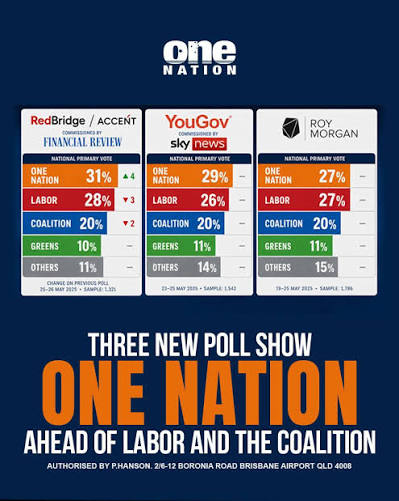
Australian federal politics has entered a state of profound volatility. According to data from the Guardian Essential Poll, the traditional two-party duopoly is facing an unprecedented structural shock.
While the incumbent Labor government navigates a bruising political climate, the major beneficiary of public discontent is not the conservative opposition. Instead, Pauline Hanson’s One Nation party has continued a remarkable upward trajectory, capturing a surging share of the primary vote, while the federal Coalition has plummeted to a historic low.
The Numbers: A Historic Contraction for the Opposition
The latest Essential poll metrics capture an existential crisis on the conservative side of Australian politics. Failing to capitalize on mounting cost-of-living pressures and public weariness toward the Albanese government, the Coalition’s primary vote cratered to a record low of 22%.
For a major political grouping that historically anchors roughly 35% to 40% of the national primary vote, dropping to a 22% baseline represents an organizational collapse.
Guardian Essential Poll: Primary Vote Dislocation
---------------------------------------------------------------------------------
Political Entity / Party Previous Baseline Latest Polling Metric
---------------------------------------------------------------------------------
The Coalition (Liberal/NP) ~28% - 32% 22% (Lowest-Ever Recorded)
One Nation (PHON) Varying / Rising Reaching up to 25% - 26%
Australian Labor Party (ALP) Varies by quarter Holding competitive floors
---------------------------------------------------------------------------------
Simultaneously, One Nation’s primary vote has climbed toward the 25% threshold in key iterations of the tracking data, cementing a multi-month surge that has upended conventional campaign modeling.
The Catalysts: Why the Map is Redrawing
The sudden realignment of conservative and populist sentiment is driven by a convergence of systemic policy debates and economic anxieties:
The Immigration Pressure Valve: At the center of the political shift is a fierce national debate over net overseas migration, population growth, and housing availability. With more than half of Australians actively demanding a lower migrant intake, One Nation’s hardline border and demographic stances have captured a massive pool of alienated voters who feel traditional parties ignored housing and infrastructure constraints.
The Cost-of-Living Squeeze: Stubborn interest rates, persistent inflation, and mortgage stress have left homeowners looking for systemic alternatives. The Coalition’s inability to present a sharp, unified economic alternative has caused conservative and outer-metropolitan working-class voters to drift away in droves.
The Protest Vote Normalisation: Disillusionment with both major parties has turned minor-party and populist voting from a transient protest gesture into a permanent, calculated parking place for millions of electors.
The Strategic Fallout
The implications for the broader political landscape are severe:
The Liberal-National Dilemma: Opposition leadership is facing an acute structural dilemma. As voters bleed toward minor populist entities on their right flank, the Coalition risks tearing itself apart over whether to chase populist rhetoric or double down on traditional economic conservatism.
Labor’s Calculated Risk: While the government retains an electoral advantage on two-party preferred metrics, the rise of a powerful third force fundamentally complicates campaign strategy. A multi-cornered contest breaks down traditional House of Representatives margin math, turning safe regional and outer-metropolitan seats into hyper-volatile marginals.
The latest polling numbers send an unmistakable message to Canberra: the electorate's patience with legacy institutional politics has worn thin. As One Nation normalizes its standing as a major electoral contender, the traditional duopoly is no longer fighting just each other—they are fighting for their own political survival.
Investigative journalist covering money, power and accountability.
Comments (0)
Comments are turned off for this story.