Tony Burke pledges to meet migration targets with tough new visa rules
New visa restrictions and deportation push target international students, backpackers, and overstayers.

2 min read · Sydney, Australia
Labor Tightens Screws on Migration: New Caps, Student Crackdowns, and Backpacker Ballots
The federal government is reshaping Australia's migration framework, rolling out a suite of immediate visa curbs designed to pull net overseas migration down to budget forecasts.
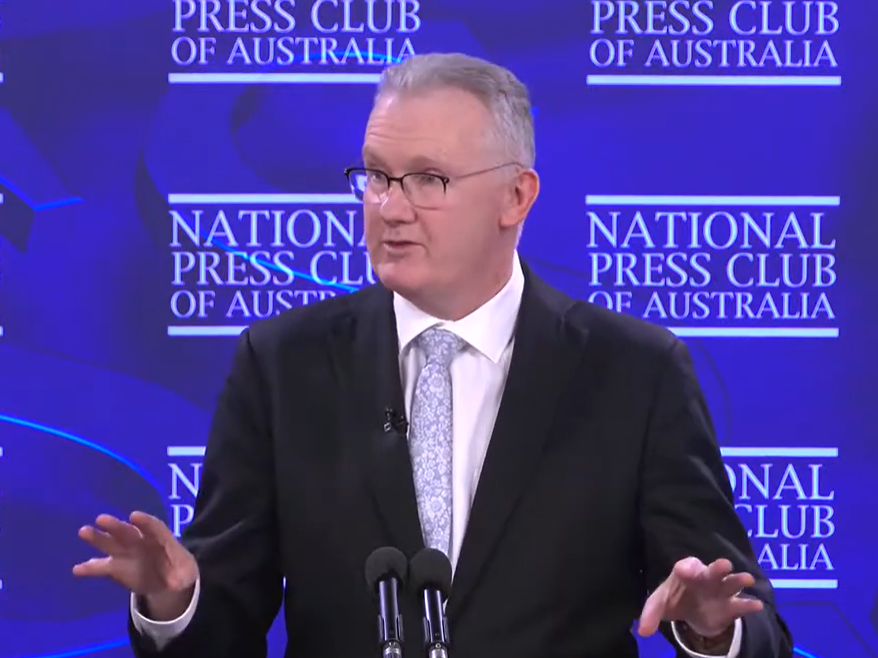
In a speech at the National Press Club, Home Affairs Minister Tony Burke confirmed that the government's migration forecasts are no longer flexible projections—they are firm targets. Under the plan, net overseas migration is slated to hit 245,000 this year, dropping to 225,000 the following financial year.
According to fresh Australian Bureau of Statistics data, net overseas migration sat at 292,100 people in the year leading up to March. While opposition parties have pushed for deeper, more aggressive cuts, Mr Burke dismissed those proposals as "absurd," warning that drastic slashing would severely damage the national economy and vital services.
Key Changes to Visas and Arrivals
International Students: Students will largely be barred from bringing family members on their visas, though existing families in Australia are exempt, along with Pacific and ASEAN nationals and select higher-level programs like PhDs.
The End of "Visa Hopping": Students wanting to transfer courses will be forced to apply for a new visa, and graduates will only be allowed to transition to courses of a higher educational level. Visitor visas will also generally carry a "no further stay" clause to prevent onshore switching. Backpacker Overhaul: The Working Holiday Maker program is introducing a strict ballot system. Second-year stays will be capped at 45,000 places, while third-year extensions will face a severe limit of just 5,000 spots, alongside mandatory regional work requirements. UK applicants remain exempt from fast-processing due to free trade agreement structures.
Prioritizing Critical Sectors: Ministerial Direction 119 is being tweaked to put construction, healthcare, agriculture, fisheries, and teaching back at the front of the visa processing queue.
Cracking Down on Overstayers and System Abuse
To target individuals remaining in the country unlawfully, the government is ramping up enforcement resources. This includes funding 100 new compliance officers and 250 additional detention beds, alongside exploring the potential reuse of Melbourne’s former quarantine facility.
Mr Burke also took aim at unscrupulous migration agents, warning that codes of conduct will be updated to sanction or deregister agents who encourage clients to lodge baseless, "non-meritorious" protection claims.
Defending the System
Addressing public debate over housing pressures, Mr Burke argued that immigration is part of the solution rather than the sole root cause of the shortage, noting that roughly two-thirds of plasterers in Sydney and Melbourne are born overseas. He also pushed back against critics claiming Australia was importing unnecessary labor, pointing out that under Labor, the country has welcomed 15,000 construction workers and zero yoga teachers.
While the government is using executive powers to implement these changes immediately, Mr Burke acknowledged that further structural reforms—such as an expression-of-interest mechanism for student arrivals and tighter curbs on weak asylum claims—will ultimately require parliamentary backing.
Investigative journalist covering money, power and accountability.
Comments (0)
Comments are turned off for this story.