A migration corridor and the diplomacy holding it together
UK-India migration corridor, reviewing ONS and Home Office data to evaluate how bilateral trade interests, student revenue models, and strict salary thresholds interact amid contracting net migration figures.
3 min read · London, UK
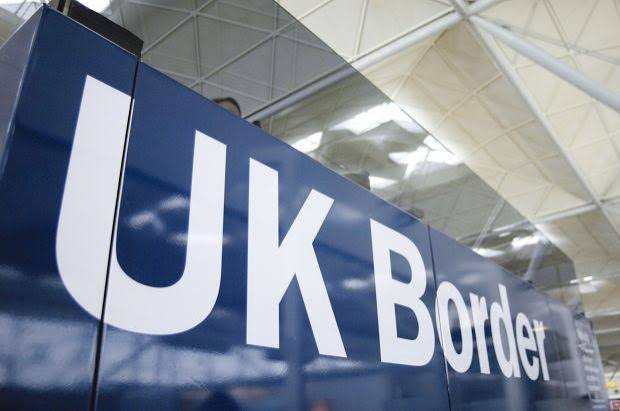
In the high-altitude geography of international diplomacy, few architecture pieces are as fragile or as fiercely contested as a bilateral migration corridor. While public discourse routinely reduces human mobility to political soundbites and border enforcement metrics, the reality inside Whitehall chancelleries and foreign ministries is governed by a complex calculus of labor supply, demographic necessity, and quiet transnational bargaining.
Among the various pathways feeding the United Kingdom’s labor and educational ecosystems, the India-UK migration corridor stands as the definitive blueprint. It is a conduit moving tens of thousands of skilled professionals, academics, and students annually. Yet, maintaining its structural integrity requires a delicate diplomatic tightrope walk: balancing domestic political demands for lowered net migration against the structural dependency of Britain’s tech, engineering, and healthcare sectors.
Anatomy of a Corridor: Data and Demographics
To understand how this corridor functions, one must look past political rhetoric and examine the Office for National Statistics (ONS) and Home Office flow baselines.
Despite successive regulatory tightening including steep hikes to the minimum salary thresholds for Skilled Workers and restrictions on dependant visas India remains the single largest non-EU contributor of long-term migration to the United Kingdom.
UK Net Migration & Indian Nationals Inflow Trajectory
---------------------------------------------------------------------------------
Metric / Period 2023 Peak 2024-2025 Shift Latest Baseline (2025/2026)
---------------------------------------------------------------------------------
Total UK Net Migration 944,000 ~500,000 171,000
Skilled Worker Main Grants (Quarter) ~62,900 (Q3) Sharp Contraction 7,279 (Q2 2026)
Top Non-EU Origin Group India India India
Primary Visa Sectors Work & Study Work & Study Health, Tech, Higher Ed
---------------------------------------------------------------------------------
*(Sources: Compiled from ONS Long-Term International Migration data and Home Office Immigration Statistics.)*
As the data illustrates, while total net migration to the UK underwent a dramatic contraction falling from its post-pandemic peak of 944,000 down to 171,000 the composition of the India-UK corridor proved structurally resilient. Even as quarterly skilled worker grants fell sharply across the board following policy resets, Indian nationals continue to anchor the top tier of work and study-related entries.
The Diplomatic Bargain: Mobility for Market Access
A migration corridor of this magnitude does not persist by accident; it is held together by high-level diplomatic reciprocity. In closed-door negotiations between London and New Delhi, the corridor operates as a vital currency in broader bilateral trade and strategic pacts.
The Higher Education Valve: British universities, facing acute structural budget deficits and frozen domestic tuition caps, rely heavily on international student fees. Indian students make up a foundational pillar of this revenue model. In exchange, bilateral frameworks have sought to protect post-study work pathways such as the Graduate Route despite persistent domestic political pressure within the UK to truncate them.
The Talent Trade-Off: For New Delhi, securing legal, structured pathways for its young, highly educated professional class to gain international experience in London’s financial and tech sectors is a core diplomatic priority. In return, the UK secures top-tier talent for critical infrastructure gaps without having to fund their primary educational development.
The Conditional Levers: Diplomacy along this corridor is increasingly transactional. Changes such as higher English language thresholds (moving to B2 requirements) and stricter salary baselines (41,700+GBP) act as bureaucratic gatekeepers. They allow the UK government to demonstrate to its domestic electorate that it is "controlling the borders," while preserving selective channels for high-value economic contributors.
The Fragility of the Conduit
Despite the sophisticated machinery holding it together, the corridor faces unprecedented systemic friction.
The tightening of dependant visa regulations which prevent most health and care workers, as well as standard students, from bringing family members has introduced severe human friction. Recruitment pipelines into the National Health Service (NHS) and social care sectors have experienced measurable cooling effects as prospective applicants look toward alternative destinations like Canada, Germany, or Australia.
Furthermore, proposed shifts toward "earned settlement" models—which extend baseline residence periods before individuals can apply for indefinite leave to remain (ILR) threaten the long-term attractiveness of the UK as a destination for permanent skilled settlement.
The Bottom Line
Bilateral migration corridors are the invisible plumbing of the globalized economy. The UK-India corridor demonstrates that modern statecraft is no longer just about guarding borders, but about actively engineering who crosses them, under what financial conditions, and at what economic cost.
As geopolitical alignments shift, the diplomacy holding this corridor together will be tested by a fundamental paradox: how a nation can simultaneously attempt to choke off aggregate migration numbers while remaining entirely dependent on the specialized talent that flows through the pipe.
Sources
Global affairs correspondent reporting on diplomacy, conflict and migration.
Comments (0)
Comments are turned off for this story.