Scientists Uncover Two New Australian Stick Insect Species Including One with "Lidded" Eggs
Identification of two new Australian stick insect species (Anchiale mabiensis and Anchiale robusta), detailing the discovery of A. mabiensis's unprecedented "lidded" eggs and the taxonomic correction of a large species that evaded formal classification for decades.
3 min read · Toronto, Canada
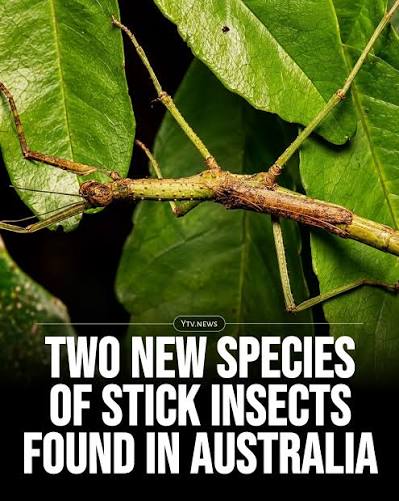
Australia’s sprawling, ancient ecosystems continue to harbor extraordinary biological secrets, even in regions long studied by researchers. In a major taxonomic revision of the genus Anchiale, scientists have officially identified two new species of large stick insects, proving that some of the continent's most massive invertebrates have been hiding right under our noses.
The discovery not only expands our understanding of regional biodiversity but also introduces an evolutionary oddity: a species that lays structurally unique "lidded" eggs never before documented anywhere in the order Phasmida.
The Discovery: Inside the Anchiale Revision
The breakthrough findings published in Austral Entomology by a research team including scientists from the University of Sydney—centered on a meticulous review of the Australian members of the Anchiale stick insect group. Stick insects are masters of camouflage, changing colors or blending seamlessly into foliage and bark, which has historically made identifying them by sight alone notoriously unreliable.
Through detailed DNA analysis and morphological detective work, researchers unearthed two distinct new additions to the scientific record, alongside the formal recovery of a third species that had been lost to taxonomic history:
Newly Revised Australian Anchiale Genus Additions
---------------------------------------------------------------------------------
Species Name Habitat / Region Distinguishing Feature
---------------------------------------------------------------------------------
Anchiale mabiensis Mabi Rainforest (Qld) Unique coffee-brown "lidded" eggs
Anchiale robusta Widely distributed (E. Aus) Hiding in plain sight; misidentified for decades
Anchiale spinicollis Historical recovery Spiny morphology (re-validated via DNA)
---------------------------------------------------------------------------------
*(Sources: Compiled from Austral Entomology taxonomic review and institutional disclosures.)*
The Star of the Find: Anchiale mabiensis and Its Lidded Eggs
The most arresting discovery of the expedition is Anchiale mabiensis, a slender, striking rainforest dweller stretching up to 6.4 inches (roughly 16 centimeters) in length. Found primarily in the critically endangered Mabi Rainforest on Queensland’s Atherton Tablelands, this species possesses an anatomical marvel that stunned researchers.
While typical stick insect eggs are smooth, oblong, and heavily engineered to mimic plant seeds to avoid predation, the eggs of A. mabiensis are coffee-brown, duller, and shorter. Most importantly, their operculum (the egg "lid") features distinct concentric inner rings.
This structural lid is a first: never before documented in stick insects or their close relatives across the entire order Phasmida. While the exact evolutionary purpose of these concentric rings remains under investigation, it offers entomologists a definitive structural marker to separate the species from its relatives.
The Giant Hiding in Plain Sight: Anchiale robusta
While A. mabiensis hides deep within fragile rainforest patches, the second new species, Anchiale robusta, was hiding in plain view. Exemplifying the adage that taxonomy is modern detective work, A. robusta is a large, heavy-set stick insect that had actually been photographed, observed, and encountered by citizens and naturalists across eastern Australia for decades. However, it was consistently misidentified as a known, similar-looking species. DNA sequencing and structural comparisons finally corrected the historical oversight, granting the robust insect its own formal scientific classification.
Conservation and the Race Against Time
The identification of these giant insects carries a sobering subtext. The habitat of A. mabiensis the Mabi Rainforest is a heavily fragmented and critically endangered ecological community, reduced to a fraction of its pre-clearing extent due to historical agricultural expansion in Queensland.
Researchers emphasize that discovering species of this physical scale in well-traveled regions highlights how much of Australia’s invertebrate biodiversity remains undocumented. As habitats face mounting pressures from climate change and land clearing, the discovery serves as an urgent reminder of the imperative to document and protect native ecosystems before unknown species vanish entirely.
Sources
Health and science reporter. Public health policy, research, and the systems behind them.
Comments (0)
Comments are turned off for this story.