The staffing ratio hospitals don't advertise in Canada
Patient-to-nurse ratios vary more than most people assume, and the variation correlates with outcomes.
3 min read · Toronto, Canada
Walk through the automatic sliding doors of any major Canadian hospital, and the glossy brochures lining the intake lobbies will sell you a reassuring corporate fiction. They talk about "patient-centered care," "world-class clinical teams," and an unyielding commitment to excellence.
What they never print on a poster—and what hospital administrators will fiercely dodge in budget estimates—is the grim arithmetic currently unfolding behind the nursing station.
For years, the public debate surrounding Canadian healthcare has been framed almost entirely around macro-level funding: billions announced, budget deficits cited, and waitlists parsed. Yet, the metric that dictates whether a patient survives an acute admission—the specific, shift-by-shift nurse-to-patient staffing ratio—remains conspicuously absent from hospital corporate disclosures and provincial health reporting.
Unlike jurisdictions in Australia or California that legally mandate hard maximums, most Canadian provinces leave staffing levels to internal hospital administration. The resulting data paints an alarming picture of an unlegislated system operating well past safe clinical thresholds.
The Baseline Numbers: What the Audits Reveal
Comprehensive independent research compiled by nursing associations and health economists, including recent baseline studies from health services researchers like Dr. Linda Aiken, reveals a stark variance between corporate PR and ward-level reality:
The Medical-Surgical Reality: While ideal standards cap general medical-surgical floors at 1:4, empirical ward audits across Canadian hospitals show that direct-care registered nurses frequently manage 5 to 7 patients at a time, scaling up even higher during night shifts. Ontario Nurses' Association
The Attrition Crisis: Ministry data and union tracking reveal a severe retention penalty for these workloads. In provinces like Ontario, structural burnout has driven turnover to critical levels, where for every 10 new nurses hired, approximately 6 leave the profession. Furthermore, over 66% of hospital nurses cite unmanageable workloads as their primary reason for planning to exit acute care. Ontario Nurses' Association
The Missed Care Index: When workloads stretch past 1:5, clinical audits show that essential care tasks are systematically dropped. Over 63% of nurses report regularly missing patient communication and comfort rounds, while upward of 54% report delayed patient mobility and range-of-motion care due to time deficits.
The Quantifiable Cost of Overworked Wards
The argument for mandatory ratios is not merely philosophical; it is anchored in hard epidemiological data tracking preventable morbidity and mortality. Extensive multi-hospital evaluations demonstrate a direct mathematical correlation between increased patient loads and adverse clinical outcomes:
Mortality Spikes: Research published in health services literature indicates that each additional patient added to a nurse’s average workload is associated with a measurable percentage increase in 30-day inpatient mortality and failure-to-rescue rates.
Readmission Rates: Unmonitored early complications directly feed emergency readmission loops. Hospitals operating under chronic understaffing see elevated 30-day readmission averages, as discharged patients leave without adequate clinical counseling or stable recovery baselines.
Physical and Psychological Toll: Workplace safety data indicates that understaffed medical wards experience high spikes in physical and verbal abuse against staff, alongside skyrocketing rates of musculoskeletal injuries driven by rapid, heavy lifting without proper auxiliary support.
The Legislative Pushback
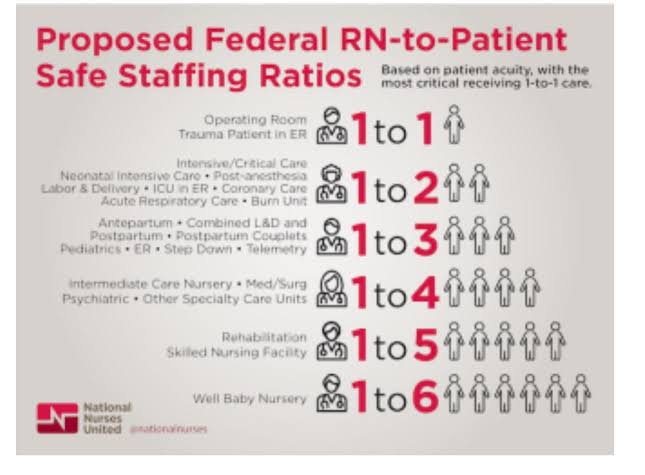
The friction between administrative flexibility and empirical safety has sparked direct political battles. While British Columbia broke historical precedent by reaching an agreement to implement minimum nurse-to-patient ratios across its health authorities, other provinces like Ontario have repeatedly voted down private member initiatives—such as proposed Patient-to-Nurse Ratios Acts—designed to legally cap medical-surgical units at 1:4 and critical care at 1:1 or 1:2. Canadian Federation of Nurses Unions Hospital boards continue to resist statutory caps, arguing that hard minimums remove scheduling agility during budget crunches. Yet, as empirical evidence mounts, the data suggests that maintaining "flexibility" comes with an unadvertised, quantifiable cost paid directly in patient safety and clinical survival rates.
Health and science reporter. Public health policy, research, and the systems behind them.
Comments (0)
Comments are turned off for this story.