Who actually owns the shipping delay
Financial mechanics of global shipping delays, analyzing legal limitations in bills of lading, the hidden weight of demurrage and inventory carrying costs
3 min read · Mexico City, Mexico
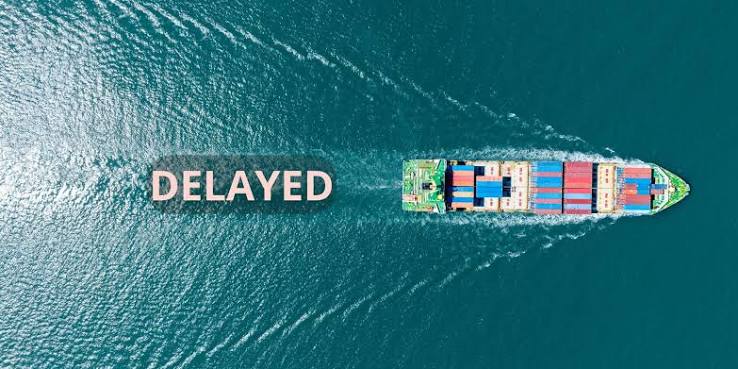
When a container ship misses its berthing window, sits anchored outside a choked harbour for twelve days, or is forced to bypass the Red Sea entirely to lumber around the Cape of Good Hope, a quiet corporate panic ensues.
Email chains multiply across continents. Inventory managers reforecast production models, sales teams scramble to appease frustrated retail buyers, and finance departments brace for sudden margin compression.
Yet, in the chaotic aftermath of a delayed supply chain, the most critical question is rarely about why the ship stopped moving. It is about who absorbs the bill. The logistics industry operates on a complex, highly litigated web of contracts, liability limits, and hidden surcharges where everyone attempts to pass the financial hot potato downward until it lands squarely on the balance sheet of the end consumer.
The Paper Shield (Contractual Liability and Bills of Lading)
To understand who owns a shipping delay, one must first look at the fine print of the Bill of Lading (BoL) the foundational legal contract between the cargo owner and the ocean carrier.
For decades, international maritime law has been governed by legacy frameworks like the Hague-Visby and Hamburg Rules, which grant ocean carriers sweeping legal immunities.
The "Act of God" and Exemption Clauses: If a container is delayed due to severe weather, geopolitical blockades, canal disruptions, or labor strikes at a municipal port, ocean liners like Maersk, MSC, or CMA CGM are largely protected from financial liability.
Per-Package Limitations: Even when carrier negligence can be legally proven, international liability caps limit compensation to nominal amounts often roughly $2 per kilogram or $500 per shipping package. For a high-value electronics shipment stuck in limbo, recovering actual losses from the carrier is an exercise in legal futility.
The Hidden Balance Sheet Metrics
Because major carriers successfully deflect direct liability for transit schedule slips, the financial ownership of the delay fragments across the supply chain. Data compiled by global freight analytics firms maps out how the cost is distributed:
Distribution of Financial Burden from Maritime Shipping Delays
---------------------------------------------------------------------------------
Stakeholder / Entity Primary Financial Impact Approx. Burden Share
---------------------------------------------------------------------------------
Cargo Owner / Importer Carrying costs, safety stock, stockouts ~50% - 60%
End Consumer Retail price inflation & scarcity ~20% - 25%
Logistics Providers / 3PLs Expedited trucking, buffer labor ~10% - 15%
Ocean Carriers Demurrage retention & spot premiums ~5% - 10% (Net benefit via rates)
---------------------------------------------------------------------------------
1. The Importer and Working Capital Trap
When a 40-foot container valued at $500,000 is delayed by three weeks, the cargo owner absorbs immediate working capital distortion. Inventory carrying costs encompassing warehouse insurance, capital tied up in slow-moving stock, and the necessity of permanently inflating safety buffers by 20% to 30% are shouldered entirely by the importing brand. If components fail to arrive at a manufacturing plant on time, factory lines sit idle, resulting in unrecoverable overhead losses.
2. The Demurrage and Detention Squeeze
Paradoxically, importers are often penalized for delays they do not cause. When port congestion or rail bottlenecks slow down container processing, terminal operators hit shippers with demurrage and detention fees penalties for containers lingering too long in port terminals or keeping chassis off-site. The importer owns the penalty, even if the root cause is structural port inefficiency.
3. The Expedited Freight Cascade
To bypass a bottleneck, a company might panic-book air freight or expedited trucking as a corrective measure. Moving cargo from sea to air can instantly multiply transport overhead by 400% to 600%. Logistics departments see this line item spike directly, absorbing the immediate penalty of trying to outrun a systemic delay.
The Ultimate Transfer to the Consumer
Ultimately, supply chain delays act as an invisible tax on the broader economy. Importers and multinational brands cannot indefinitely absorb 30% spikes in safety stock holding costs, recurring demurrage fines, and emergency air-freight premiums.
Through a process of margin pass-through, these accumulated inefficiencies are baked into the final retail cost of goods. When you pay an inflated price for furniture, electronics, or manufactured inputs, you are not just paying for the material; you are paying an invisible insurance premium against a global logistics network that has normalized chronic unreliability.
Nobody wants to own a shipping delay. But in the modern commercial arena, the system ensures that the financial shock wave always travels downward passing past the carrier, slipping past the port, and resting quietly on the consumer checkout receipt.
Sources
- Trade association contract filings
Business and climate correspondent covering how economic policy shapes the energy transition.
Comments (0)
Comments are turned off for this story.